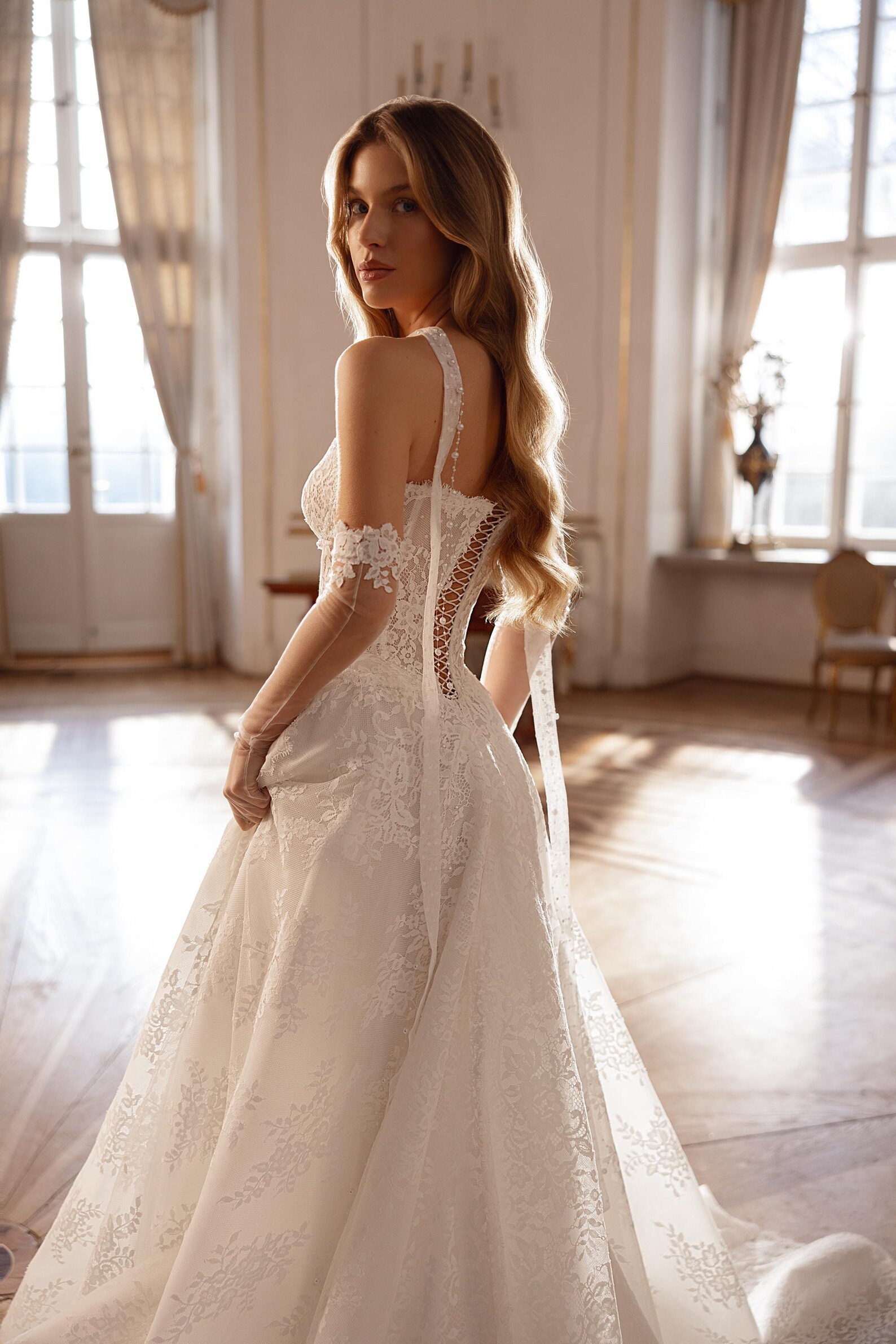
Let’s strip away the fantasy for a second. SEO doesn’t care about mood boards. It cares about behavior. And search behavior is brutally honest.
When brides open a search bar, they’re not typing poetry. They’re typing problems:
- “basque waist wedding dress”
- “reception dress ideas”
- “wedding ceiling draping cost”
- “detachable sleeves bridal gown”
This report is built from real trend signals — not guesses — using data and forecasting from Google search insights, Pinterest trend reports, and industry research from The Knot and Brides.
The goal isn’t to predict fashion. It’s to decode intent, because intent is what drives traffic — and traffic is what drives bookings.
Brides Search for Decisions, Not Categories
The old SEO model assumed users searched broad categories (“wedding dress,” “bridal gown,” “wedding venue”). That’s still true at the top of the funnel — but the real growth is happening deeper down.
Runway analysis from New York Bridal Fashion Week shows specific silhouettes like basque waists, exposed corsetry, layered lace, and dramatic structure becoming dominant themes for Spring 2026 collections.
That runway signal rapidly translates into search demand.
Instead of generic queries, users now search:
- style + feature (“basque waist with sleeves”)
- function + problem (“dress you can change into for reception”)
- vibe + identity (“soft glam wedding dress”)
This matters because Google increasingly rewards pages that answer precise questions rather than broad topics.
Translation:
If your site only has a page called “Wedding Dresses,” you’re invisible to most modern search intent.
Trend #1: The Rise of Modular and Multi-Look Bridal Fashion
One of the clearest Q1 signals: brides want flexibility.
Industry coverage highlights reception minis, detachable elements, and convertible designs becoming mainstream options.
Why? Three practical drivers:
- Comfort and movement during receptions
- Social media photo variation
- Cost efficiency — one dress, multiple looks
Search behavior reflects this practicality:
- “convertible wedding dress”
- “detachable sleeve wedding gown”
- “mini reception dress”
This isn’t aesthetic fluff. It’s logistics.
SEO play
Create content that solves transitions, not just style inspiration:
- “How to change your wedding look without changing dresses”
- “Ceremony-to-reception bridal styling guide”
- “Best detachable bridal accessories”
These are high-intent pages with lower keyword competition and higher conversion potential.
Trend #2: Runway Trends Reach Search Faster Than Ever
Historically, bridal fashion took years to influence search behavior. That lag has collapsed.
Examples from Spring 2026 runway coverage — especially basque waists — already appear across consumer content and trend reporting.
What’s happening?
- Social media compresses trend cycles.
- Visual platforms accelerate adoption.
- Brides research earlier than ever.
By the time a trend feels obvious, you’re already late.
Strategic implication
Publish educational SEO content before mainstream demand peaks:
- “What is a basque waist wedding dress?”
- “Basque waist vs drop waist: what’s the difference?”
Early explanatory content often wins long-term rankings because Google prefers authoritative first movers.
Trend #3: Pinterest Shapes Search Before Google Sees It
This is where most bridal brands misunderstand traffic flow.
Search demand increasingly begins on visual discovery platforms. Pinterest Predicts highlights rising interest in dramatic decor elements and immersive wedding aesthetics, including large-scale draping and nostalgic styling themes.
User journey now looks like this:
- Save visuals on Pinterest
- Build emotional preference
- Move to Google for execution details
So by the time someone Googles “wedding draping cost,” they already know what they want.
SEO mistake brands keep making
They publish galleries instead of explanation pages.
Images attract attention, but information closes intent.
Trend #4: Aesthetic Language Becomes Keyword Language
The Knot’s large-scale wedding studies show growing influence of “quiet luxury,” nostalgia, and vintage-inspired identities in wedding planning.
That creates entirely new keyword clusters:
- “old money wedding style”
- “quiet luxury bridal look”
- “editorial wedding photography”
These aren’t just social buzzwords. They become stable search phrases once enough users adopt them.
This is where brands get lazy and copy each other. Don’t.
Aesthetic terms only rank well when paired with real guidance:
Bad:
“Old Money Wedding Inspiration”
Better:
“Old Money Wedding Style: Dress, Venue, and Photography Decisions
Explained”
Trend #5: Brides Are Searching for Control, Not Fantasy
Read between the lines of the data and something psychological appears.
Searches are increasingly practical despite looking glamorous on the surface:
- how to move comfortably
- how to create multiple looks
- how to personalize experiences
The Knot’s 2026 trend forecasting highlights customization, experiential design, and nostalgia-driven choices.
This suggests a deeper shift:
Brides aren’t searching for perfection — they’re searching for certainty in an overwhelming planning process.
SEO content that reduces decision stress wins.
What This Means for Bridal SEO in 2026
Let’s get blunt. Most bridal blogs fail because they’re written like magazines instead of search assets.
Here’s what actually works:
1. Build micro-trend pages, not broad categories
Instead of “Wedding Dress Trends”, create:
- “Basque Waist Wedding Dresses Explained”
- “Soft Glam Bridal Style Guide”
- “Reception Mini Dress Ideas”
2. Answer questions directly
Search intent is question-driven. Use headings that mirror real searches:
- What is it?
- Who does it suit?
- When should you choose it?
- What are alternatives?
3. Combine visuals with decision support
Images inspire. Text converts. A high-performing page includes:
- explanation
- comparisons
- practical advice
- product pathways
4. Target pre-purchase uncertainty
The richest SEO zone is indecision:
- “Do I need a second wedding dress?”
- “Can I wear a basque waist if I’m petite?”
These queries bring users closer to action.
The Hard Truth Most Brands Ignore
Here’s the uncomfortable insight hiding in this data:
Brides don’t search for weddings. They search for confidence.
Every query is a quiet attempt to reduce risk:
- Will this look good?
- Is this trend still relevant?
- Am I making the right choice?
If your content only showcases aesthetics, you’re speaking to emotion but ignoring anxiety — and anxiety is what drives search.
Final Takeaway: Where the Traffic Is Really Going
Q1 2026 bridal search signals point to three realities:
- Search intent is becoming hyper-specific.
- Visual discovery platforms influence Google demand.
- Early educational content captures long-term traffic.
The brands that dominate organic traffic won’t be the prettiest. They’ll be the clearest.
Because at 1 a.m., when a bride opens Google, she isn’t looking for inspiration anymore.
She’s looking for answers.
And Google rewards whoever gives them first — and best.